Arthur Horwich Assessments created by Dr. Nathan H. Joh. Questions Select the answer choice with the most appropriate words to fill the blanks below. Anfinsen discovered in 1961 that the four disulfide bridges in ribonuclease, which were reduced by denaturing the protein in 8 M urea in the presence of beta-mercaptoethanol, formed again and the…
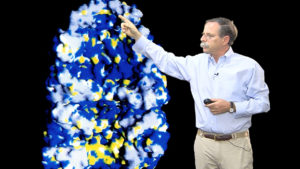
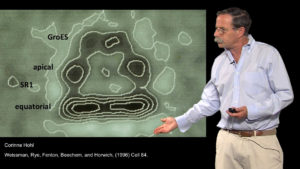
Arthur Horwich begins with a brief history of the discovery of the chaperonins and their importance in proper protein folding. (Talk recorded in July 2013)
Arthur Horwich talks about the story behind the discovery of the molecular chaperonin protein family and the role these chaperones play in protein folding. (Talk recorded in July 2012)
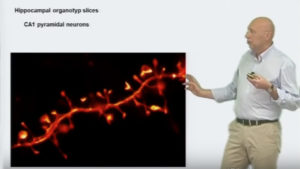
Stefan Hell describes two super-resolution microscopy techniques: STED (Stimulated Emission Depletion) and RESOLFT (REversible Saturable OpticaL Fluorescence Transitions). (Talk recorded in May 2013)
Dear Colleagues, I want to thank all of you for your support of iBiology over the past 15 years. This organization and effort was built upon countless volunteer hours by speakers and the tireless effort of a small team who wanted to support the scientific community and those who wanted to learn about different fields,…
Explore CRISPR with educator resources by Marina Ellefson, UC Davis Molecular Biology professor. Engage students with a 13-min film, innovative short videos, and versatile curriculum aligned with genetics and ethics.
Free Biology Lecture Videos Search our library of hundreds of in-depth biology lecture videos presented by the scientists behind the discoveries. Free Online Courses for Scientists We offer a bevy of free professional development and research skills courses for early career scientists and trainees. Free Educator Resources We provide free educator resources for our content,…
Marco Milella, Ph.D., is a research assistant at the Department of Physical Anthropology, Institute of Forensic Medicine, University of Bern. Born and raised in Venice, Italy, Marco got a Ph.D. in evolutionary biology at the University of Bologna. He then moved to Switzerland, working first at the University of Zurich and now in Bern. He…
Swati Shrestha is a PhD candidate at the University of Florida, in the Vegetable Breeding and Genetics lab. For her thesis research, she develops and applies molecular tools for accelerated breeding of Potyvirus resistance in squash. Swati is interested in science communication as much as she is into research and development. In the future she…
Don Hankins is a Professor of Geography and Planning at California State University, Chico. Drawing from his academic and cultural knowledge he is particularly interested in Indigenous traditional knowledge and policy and their application as a keystone process to aid in conservation and stewardship.
When I started working with the Science Communication Lab, they were in a period of great transformation — working to lay out the next phase of evolution for the organization.
Takahiro Ohara is an MD-PhD student at Washington University in St. Louis. Interested in regenerative medicine, his research focuses on how intestinal villi recover from injury. He received a B.S. from UCLA in Molecular, Cell, and Developmental Biology with a Minor in Biomedical Research.
Line K Bay is a biologist with a passion for biodiversity, conservation and coral reefs. She is Team Leader of the Reef Recovery, Adaptation, and Restoration team and a Principal Research Scientist and Sub Program leader of the Reef Restoration and Adaptation Program (RRAP) at the Australian Institute of Marine Sciences (AIMS). Her research group…
Mia Howard is an ecologist interested in soil microbes and plant-herbivore interactions. She completed her doctoral research at Cornell University, where she studied the chemical ecology of plant-microbe-insect interactions in native goldenrod (Solidago altissima), and is currently a postdoctoral research fellow at Indiana University.
Maiko Kitaoka is a PhD candidate in the Heald Lab in the Department of Molecular and Cell Biology at the University of California, Berkeley. Broadly interested in what the cell cycle and cell division reveal about developmental and evolutionary biology, she uses three different Xenopus frog species to study spindle morphometrics and the mechanisms driving…
Doria Gordon is a lead senior scientist in the Office of the Chief Scientist at the Environmental Defense Fund (EDF). In addition, she is a courtesy professor of biology at the University of Florida and a research associate at Archbold Biological Station near Lake Placid, Florida. Her research interests include forest restoration, fire ecology, and invasive…
Learn how to identify and leverage your needs, preferences, and values (NPVs) to find a lab and postdoctoral research mentor that align with your NPVs and your career goals. (Talk recorded in February 2021)
Sometimes it’s just easier to hear it from a peer. In order to enhance the learning experience for our 2021 Share Your Research (SYR) winners, we asked some of our 2020 winners to sit in on workshop sessions, provide insight, and share their experiences.
Share Your Research is a course that will guide learners through the steps of creating and delivering a good research talk. We designed this course for anyone who will be giving research-based scientific talks in the future. This list includes (but is not limited) to advanced undergraduate and graduate students, postdocs, as well as early-career…
Dr. Jaymer Dyer was part of our 2015 cohort of the Young Scientist Series winners. She has since launched a YouTube channel for biology educators. We caught up with Jayme to find out more about what she’s been up to since her time in the iBiology studio.
Finding your path in science or any other career field is rarely a straightforward endeavor. As our Director of Career and Professional Development, Alexandra Schnoes has a knack for planning and spends her time creating meaningful tools to help scientists envision their futures. In our conversation she shares how she has found meaning in her own career by following her interests and creating resources for others that she wished she’d had along the way.
This year has forced all of us to adapt in many ways. Executive Producer, Elliot Kirschner, takes a moment to reflect on the innovation, resilience, and focus that this year has brought to our organization throughout 2020.
Jessica Polka, Executive Director of ASAPbio, talks about how the COVID-19 pandemic has inspired a surge in the use of preprints to share research rapidly and how this is changing perceptions of peer review. (Talk recorded in April 2020)