Free Biology Lecture Videos Search our library of hundreds of in-depth biology lecture videos presented by the scientists behind the discoveries. Free Online Courses for Scientists We offer a bevy of free professional development and research skills courses for early career scientists and trainees. Free Educator Resources We provide free educator resources for our content,…
Senior Director, Strategic Initiatives Jennifer Frazier is the Senior Director of Strategic Initiatives at the Science Communication Lab. Jennifer creates experiences that engage the public with science through exhibitions, artworks, and live programming. She was a scientist and curator at the Exploratorium for 18 years, where she co-led the museum’s program in biological sciences. Jennifer…
The COVID-19 pandemic is forcing education at all levels online. Here are a few ideas to help you stay mindful of educational goals and work within reasonable limits as you adapt your course to a digital space.
Dr. Sven Truckenbrodt is a postdoctoral fellow investigating the nanoscale architecture of synapses at the Institute of Science and Technology Austria by further advancing X10 expansion microscopy, a new method for super-resolution imaging developed during his PhD at the University of Göttingen.
Course Overview: This course is designed as a graduate student level introduction to bioimage analysis and will provide an overview of the practice and principles of microscopy digital image handling. This series follows the life cycle of an image data set, from acquisition to analysis. It teaches important concepts and best practices, and provides examples…
Anne Carpenter is an Institute Scientist at the Broad Institute of MIT and Harvard. Carpenter completed her bachelor’s degree in biological sciences, and a doctoral degree in cell biology from the University of Illinois, Urbana-Champaign. She continued her scientific training as a postdoctoral fellow at the MIT/Whitehead Institute for Biomedical Research in the laboratory of…
Christian Tischer studied physics in Heidelberg, followed by Ph.D. at the European Molecular Biology Laboratory (EMBL) with Dr. Philippe Bastiaens working on microscope development and signalling in mammalian cells. Subsequently, he did a postdoc with Dr. Marileen Dogertom at AMOLF in the Netherlands, where he worked on microtubule dynamics. From 2009 until 2018, he worked…
This course is designed as a graduate student level introduction to bioimage analysis and will provide an overview of the practice and principles of microscopy digital image handling. This series follows the life cycle of an image data set, from acquisition to analysis. It teaches important concepts and best practices, and provides examples that will…
Dr. Christian Tischer walks us through the main concepts of a typical bioimage analysis workflow and explains how to quantitatively interpret the content of microscopy images. (Talk recorded in March 2019)
Dr. Jason Swedlow is a professor at the University of Dundee in Scotland, and co-founder of the Open Microscopy Environment (OME) project. Swedlow obtained his bachelors in Chemistry from Brandeis University (1982), and completed his PhD in Biophysics at the University of California, San Francisco (1994). He continued his scientific training as a postdoctoral fellow…
Eukaryotic cells have many different membrane-bound organelles with distinct functions and characteristic shapes. How does this happen? Dr. Tom Rapoport explains the important role of protein sorting in determining organelle shape and function. (Talk recorded in February 2019)
The endoplasmic reticulum (ER) is a dynamic network of tubules that reaches throughout a cell. It interacts with other organelles at membrane contact sites. As Dr. Gia Voeltz explains, these sites are critical for Ca2+ regulation, lipid transport and defining sites of division for endosomes and other organelles. (Talk recorded in January 2019)
iBiology and our partners the Albert and Mary Lasker Foundation and the Alda Center for Communicating Science are proud to announce the four winners of the 2019 Young Scientist Seminars’ competition!
Dr. Philipp Keller earned his Master of Science in Physics at the University of Karlsruhe and at the University of Heidelberg in 2005. He continued his graduate studies at the European Molecular Biology Laboratory (EMBL). After a short postdoc at EMBL, he joined the faculty at HHMI’s Janelia Research Campus in 2010. His lab uses…
Ron founded iBiology in 2006 and continues to oversee the project as President and Chairman of the Board. Ron is a Professor of Cellular and Molecular Pharmacology at the University of California, San Francisco and an investigator of the Howard Hughes Medical Institute. His lab studies spatial organization, movement, and signaling within cells. Ron, a…
Robert Singer’s lab has developed specialized techniques that allow them to visualize RNA localization of a single mRNA molecule from birth to death in living cells. (Talk recorded in February 2018)
Peter Walter Assessments created by Dr. Yi Liu Questions In his talk, Dr.Walter briefly introduced endoplasmic reticulum (ER). Which of the following statement(s) is true (select all that apply)? Proteins enter the ER in an unfolded state as they come out of the ribosome. Proteins fold in the ER Proteins assemble into multi-subunit complexes in…
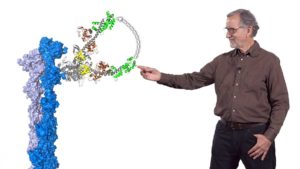
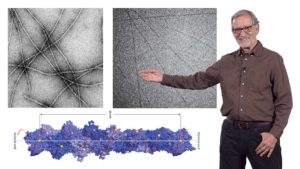
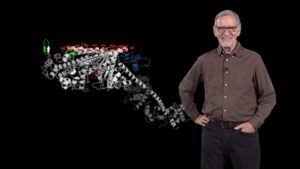
James Spudich begins his talk with an early history of muscle biology and moves forward to our current understanding of the molecular basis of muscle contraction and disease. (Talk recorded in May 2017)
A big part of advancing research is developing new techniques. These videos highlight how scientists have developed novel techniques to address important questions in biology. Techniques Microscopy Series Short Microscopy Series
Talks for biology graduate students and researchers from scientific leaders. Get the inside scoop on exciting discoveries, as well as professional development and career advice. Famous Discoveries Professional Development Microscopy Series Career Exploration Open edX Courses Planning Your Scientific Journey iBiology Courses Demo Course Biochemistry Bioengineering Biophysics Cell Biology Development and Stem Cells Ecology Evolution…
Hugh Huxley Assessments created by Dr. Rachna Sharma Questions What was the specific research problem pursued by Dr. Huxley? The energetics of muscle. The biochemistry of muscle. The mechanics of muscle. The submicroscopic structure of muscle. None of the above What was Dr. Huxley able to show using X-Ray technology and a projection of the…
Shinya Inoue Assessments created by Dr. Delquin Gong Questions In his talk and in the paper, Dr. Inoue introduces the concept of birefringence. In simple terms, what is birefringence and why did Dr. Inoue need to use it for his cell division experiments? Dr. Inoue and his colleague used several methods to perturb the dividing…